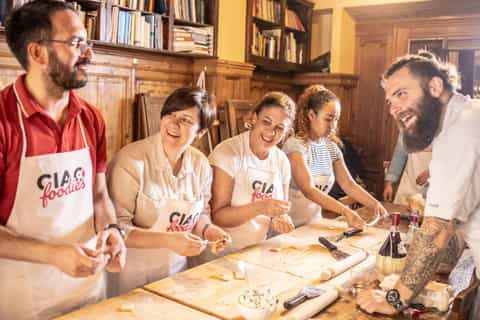
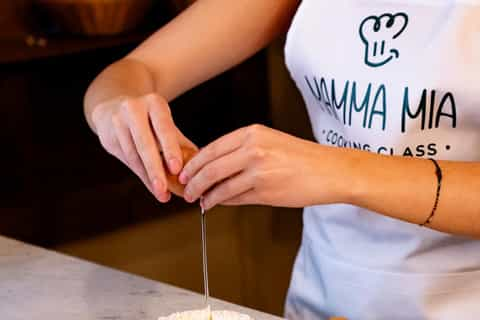
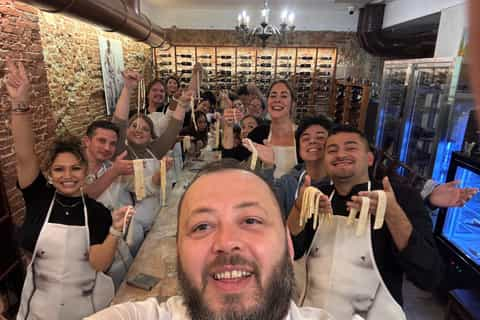
Florence: Pasta & Tiramisu Cooking Class with Unlimited Wine
This is a strong first pick if you want a low-price class with a very high rating and lots of reviews. It fits the search intent fast.
Book an Italian tiramisu cooking class in Florence for 2026. Compare pasta-and-tiramisu options, wine levels, and the details that matter before you reserve.
This is a strong first pick if you want a low-price class with a very high rating and lots of reviews. It fits the search intent fast.
This site is independent and is not the official website of the operator. Some links are affiliate links, and we may earn a commission at no extra cost to you. We help you compare class type, inclusions, duration, wine, and meeting point.
Compare six of the most booked Florence cooking classes here. These six options appear in descending review order, so you can compare format, how much food is included, duration, group size, dietary options, and traveller feedback fast.
1
Most reviewed
★★★★★ 4.9074492 · 8,597 reviews
It has the most reviews among these six options. Choose it if you want a very well-reviewed Florence class with a low starting price and a simple pasta-and-tiramisu format.
2
Popular choice
★★★★★ 4.821785 · 1,653 reviews
This is a smaller-reviewed version of the same core cooking format. Compare it with the card above if you care more about the live booking details than the review total.
3
Gift included
★★★★★ 4.883242 · 691 reviews
This option adds a gift and a history angle to the same food-focused format. It suits travellers who want more than a simple class and do not mind fewer reviews than the top two.
4
VIP class
★★★★★ 4.8910146 · 465 reviews
This version puts ravioli and tagliatelle in the title, so it may suit travellers who want more pasta variety. Its lower review count makes it a more specific pick than the options above.
5
Higher price
★★★★★ 4.8043523 · 352 reviews
Its price sits above the lower-cost options shown here, while the review count is also lower. Compare it if you want the same cooking-class idea and are weighing cost against traveller feedback.
6
Near Duomo
★★★★★ 4.757768 · 171 reviews
Its title points to a Duomo-area location, which may help if you want a central cooking class. It has the fewest reviews of the six, so check the live details before you decide.
Compare the main Florence tiramisu classes side by side. See which ones cost less, which ones have the strongest traveller feedback, and which format suits your plans.
| Option | From | Rating | Reviews | Format | Includes | Best for |
|---|---|---|---|---|---|---|
| Florence: Pasta & Tiramisu Cooking Class with Unlimited WineSimple pasta-and-dessert class with the largest review base here. | €18 | 4.9074492 | 8,597 | Cooking class | Pasta, tiramisu, unlimited wine | Travellers who want the lowest entry price and the most traveller feedback. |
| Florence: Pasta & Tiramisu Cooking Class with Unlimited WineSame core format, with a higher starting price and fewer reviews. | €30 | 4.821785 | 1,653 | Cooking class | Pasta, tiramisu, unlimited wine | Visitors who want the same class style and are comparing live booking details. |
| Florence Cooking Class: History, Wine, Pasta, Tiramisu, GiftAdds a history angle and a gift to the food class. | €29 | 4.883242 | 691 | Cooking class | History focus, wine, pasta, tiramisu, gift | Travellers who want a fuller experience with a gift included. |
| Florence VIP Tagliatelle, Ravioli & Tiramisu Class with WinePuts more pasta variety into the same Florence cooking format. | €18 | 4.8910146 | 465 | VIP cooking class | Tagliatelle, ravioli, tiramisu, wine | Visitors who want extra pasta variety alongside the dessert. |
| Florence: Pasta and Tiramisu Class with Unlimited WineHigher-priced option for travellers weighing cost against review volume. | €40 | 4.8043523 | 352 | Cooking class | Pasta, tiramisu, unlimited wine | Travellers who want the same format and do not mind paying more. |
| Florence: Pasta, Ravioli & Tiramisu Cooking Class Near DuomoHighlights a central Duomo-area location with the smallest review base. | €30 | 4.757768 | 171 | Cooking class | Pasta, ravioli, tiramisu | Visitors who want a central meeting point and a tighter pasta-and-dessert menu. |
Answer four quick questions: what you want to make with your tiramisu, how long you have, your budget and your tie-breaker. We’ll compare all nine classes on this page and show your closest match, plus a second option.
Pick the options that fit your plans. We’ll compare all nine tiramisu classes and show the closest match.
Your progress shows here until all four answers are set.
These classes can look similar while covering different food, wine and meeting details. Check the booking page carefully before you pay, so you choose the right format and know what to expect on the day.
The title can include wine without saying how much.
Some Florence cooking classes include unlimited wine, while others only include wine with the meal. If you assume every option works the same, you may book a class that does not match your group or drinking plans.
Fix: Check the inclusions line on the exact ticket. Look for “unlimited wine,” “wine included,” or no wine note at all before you pay.
The menu can change even when the class name looks similar.
One option may focus on pasta and tiramisu, while another adds ravioli, tagliatelle, or a gift. If you want a full meal or a specific pasta shape, the wrong listing can leave you with a different class from the one you expected.
Fix: Open the full menu section on the ticket page. Confirm the pasta type, the dessert, and whether the meal is built around lunch or dinner before booking.
The meeting point may not be near the Duomo.
These classes can start at different kitchens or restaurants across Florence. A name that sounds central does not always mean the meeting point is easy to find, and a wrong map pin can make you late for check-in.
Fix: Save the exact meeting address from your voucher, not the city centre map pin. Check the street name, the meeting time, and how far it is from your hotel before you leave.
Dietary needs may not be covered by every class.
Tiramisu usually includes eggs, dairy and gluten, and the pasta is often made with wheat. If you need vegetarian, vegan, gluten-free, or allergy support, a class that looks suitable at first can still be the wrong choice.
Fix: Read the dietary notes on the ticket, then message the operator if anything is unclear. Ask about ingredients, cross-contact, and whether your group can join the same class safely.
This section covers the practical details that matter after you pick a Florence cooking class. It focuses on timing, what you eat, wine, meeting points, dietary limits, and accessibility.
A Florence pasta-and-tiramisu class is often about 2 hours 30 minutes.
One bookable Florence example lasts 2 hours 30 minutes and pairs fresh pasta with tiramisù and unlimited wine. That gives you a useful planning window for your day.
Do not assume every class runs the same length. Some sessions add more pasta work, a larger meal, or extra service time.
If you are fitting the class around sightseeing, leave a little buffer before and after. A hands-on cooking session can run close to the stated time.
That matters most if you have another booking after it. A tight schedule can feel rushed once the group starts cooking and eating.
The example listing includes a practical cooking lesson, fresh pasta, tiramisù, and unlimited wine.
One Florence product includes a practical lesson, fresh pasta, tiramisù, and unlimited wine. It also says spirits are excluded.
That mix is not universal across all classes. Other products may add a gift, different pasta shapes, or a different wine setup.
Always read the inclusions line on the exact ticket. That is where you see what you are actually buying.
This helps you compare a full cooking class with a lighter tasting-style booking. The food and drink mix changes the whole value of the ticket.
Many of these Florence classes are built around a cooked meal, not just a dessert demo.
The product examples here include pasta, tiramisù, and wine, so they usually work as lunch or dinner. They are more than a quick tasting stop.
That said, the exact amount of food depends on the class. Some tickets focus on pasta and dessert, while others add more course-style elements.
If you want a full meal, choose a class that clearly lists pasta and wine. If you only want dessert, a broader cooking class may be more than you need.
This matters because people often treat a cooking class like a snack stop. In Florence, many of these tickets are a real meal slot.
Meeting points vary by product, so the address on your voucher is the one that counts.
There is no single meeting point for this category. One example starts at Via dei Servi 85R, 50122 Florence.
Other products use different Florence kitchens or restaurants. The class name does not always tell you where to go.
Save the exact meeting address from your booking and use that for navigation. A city-centre map pin is not enough.
This matters most on the day of travel. Florence streets can be busy, and a wrong address can make you late for check-in.
Some Florence classes include wine, and some include unlimited wine, but spirits are not part of the example ticket.
The examples here show wine in different forms. One class clearly includes unlimited wine, while another just says wine.
Do not turn that into a rule for all classes. The drink setup changes from one product to another.
If you do not drink alcohol, check the ticket for non-alcoholic options before you book. The product pages do not all say the same thing.
This also helps avoid a common mistake. Wine served with the class does not mean the dessert itself contains alcohol.
Traditional tiramisù uses mascarpone, eggs, coffee, savoiardi, sugar, and cocoa, so diet needs need careful checking.
The core dessert is built on dairy, eggs, and wheat biscuits. That makes standard tiramisù unsuitable for many diets without changes.
One broader class note says dietary support can vary by product. That means you should not assume vegan or gluten-free options are always available.
If your needs are medical, confirm the exact menu and cross-contact handling before you book. The dessert is only one part of the class.
This matters most for people with allergies or celiac needs. The cooking space may also handle flour for pasta, which can affect the whole session.
Yes, these are hands-on tourist classes, not professional chef training.
The format is built for visitors who want to cook, eat, and learn by doing. The product names point to a simple class style, not a technical course.
That makes them a good fit for first-time cooks and casual travellers. You do not need any special kitchen experience.
Expect step-by-step guidance, especially on pasta and dessert assembly. The goal is a fun meal you helped make.
This helps if you are choosing between a showpiece experience and a practical one. Here, the cooking part is the point.
Accessibility varies by product, and one Florence example says it is wheelchair accessible.
One listed class includes wheelchair accessibility, accessible surfaces, and stroller or pushchair access. Another product in the same category is not described that way.
Do not assume every Florence cooking class has the same layout. Kitchen spaces and restaurant rooms can differ a lot.
If accessibility matters, confirm the exact product and venue before booking. Step-free access is a product detail, not a sitewide rule.
This is especially important if you need space for a wheelchair, a stroller, or an easy route through the room.
Wear comfortable clothes that can handle a kitchen, because pasta classes involve food prep and movement.
The products here do not publish a formal dress code. For a cooking class, the useful choice is practical clothes you do not mind getting a little messy.
Closed shoes are sensible in a kitchen. Loose sleeves and heavy jewellery can get in the way while you cook.
You should also plan for a warm indoor room if the class runs in the cooler months. Comfort matters more than style here.
This is not a dress-up experience. The main thing is to move easily, cook comfortably, and enjoy the meal after.
Choose by the meal style, the wine level, the pasta shape, and how much traveller feedback you want.
The biggest review base sits with the pasta-and-tiramisù class that includes unlimited wine. Other options add a gift, ravioli, tagliatelle, or a central Duomo-area meeting point.
That means the best choice is not only about rating. It is also about the exact format you want on the day.
If you want a simple first pick, choose the core pasta-and-dessert format. If you want more pasta variety, look at the ravioli or tagliatelle versions.
This helps narrow the field fast without guessing. You are choosing a cooking format, not just a dessert title.
Most visitors focus on the dessert and miss the structure behind it. An Italian Tiramisu Class teaches more than a recipe: it shows how a modern Italian dessert became a shared kitchen format, then adapted to Florence’s food culture. What matters is not only the final bowl, but the balance of coffee, cream, biscuit and timing.
Tiramisu is simple to taste, but precise to make.
Tiramisu works because each layer does a different job. The coffee softens the biscuits, the mascarpone mixture gives weight, and the cocoa finishes the top with a dry note. If one part dominates, the dessert loses its balance.
That balance is why the dessert feels lighter than many cream-based sweets, even though it is rich. The name itself is often translated as “pick me up,” which fits the way coffee, sugar and cocoa create a sharp lift after a meal.
Florence is a city where food is part of the visitor experience, not just a side note. A tiramisu class fits that setting because it turns a familiar Italian dessert into a shared table activity, the same way Tuscan cooking often links technique, eating and conversation.
It also helps that Florence gives the dessert a clear contrast. Tiramisu is not a traditional Florentine sweet, so meeting it in Florence makes its wider Italian identity more visible. You are not seeing a local specialty in isolation; you are seeing how Italian food travels, adapts and becomes part of a city’s everyday visitor culture.
Many people treat tiramisu as if it were a fixed dish. In practice, it sits between tradition and variation. The core elements stay familiar, but the method, proportions and finishing details can change from one kitchen to another.
That matters because it changes what you should notice. Watch how the biscuits are soaked, how firm the cream stays, and whether the top is dusted evenly or left rough. Those small choices tell you more about the class than the name on the ticket.
Think of the experience as a lesson in Italian balance rather than a dessert demo. Once you start noticing texture, layering and timing, the class becomes easier to understand as food craft, not just a sweet finish to lunch or dinner.
No previous experience is needed for most beginner-friendly workshops. An instructor normally guides you through the ingredients, cream and layers.
Look for a hands-on class rather than a demonstration if you want to make the dessert yourself.
It depends on the workshop. Some classes give each guest their own dessert to assemble; others prepare portions in teams.
Check the activity description or ask the provider about individual workstations if making your own portion matters to you.
Dedicated dessert workshops can take around 90 minutes. Combined pasta-and-tiramisu experiences commonly last about three hours or longer.
Check the full duration before planning another attraction or train journey, and allow extra time to reach the meeting point.
Traditional tiramisu typically uses mascarpone, eggs, sugar, coffee, ladyfinger biscuits and cocoa. Recipes and methods differ between instructors.
If you avoid raw eggs, caffeine or a particular ingredient, contact the provider before booking rather than assuming the recipe can be changed.
Some recipes include Marsala wine, liqueur or another alcoholic ingredient; others do not. Alcohol is not a guaranteed part of every Florence workshop.
Ask whether an alcohol-free version can be prepared, especially when booking for children or anyone avoiding alcohol.
Classic tiramisu contains mascarpone and usually eggs, so it is not naturally dairy-free or vegan. Some providers may offer alternatives, but many cannot.
Tell the operator your dietary requirements before purchasing and confirm that a suitable recipe will actually be available.
Standard ingredients can contain milk, eggs and wheat. Even where a substitute is offered, shared kitchen equipment may create cross-contact risks.
For serious allergies or coeliac disease, request ingredient and preparation details directly from the operator. Do not treat a 'gluten-free option' label as a cross-contact safety guarantee.
Many workshops welcome families, but minimum ages and adult-supervision rules vary. Some longer cooking experiences have age limits.
Check the selected class's child policy and whether it uses coffee, alcohol or ingredients that should be adapted for your family.
Many Florence cooking experiences offer English-speaking instructors, but language options depend on the specific session.
Choose the correct language when booking and check your confirmation. Do not assume that every departure is multilingual.
Most hands-on dessert workshops include a tasting, but the timing and portion size differ. Some combined cooking classes serve the tiramisu after a pasta meal.
Check whether tasting, drinks and any other food are included before treating the booking as lunch or dinner.
Not necessarily. Tiramisu is a chilled dessert, and some operators serve it on site rather than provide takeaway containers.
Ask whether takeaway is allowed and how the dessert is kept cold, especially if you have sightseeing or travel planned afterwards.
Only if your selected package specifically lists those activities. A dessert-only workshop is different from a longer pasta-and-tiramisu cooking class.
Compare the itinerary and inclusions carefully: some market visits are available only with particular morning departures.
There is no single meeting point for Florence tiramisu classes. Lessons can take place in central Florence kitchens, restaurants, private homes or venues outside the city centre.
Open the exact map location on your booking voucher. Do not assume hotel pickup or a central meeting point unless it is stated in the ticket.
Follow the check-in time on your confirmation. Some Florence cooking providers request arrival around 15 minutes before the class begins and may start without late guests.
Check walking and travel time in advance. If you are delayed, contact the operator using the details on your booking.
Cancellation deadlines vary by experience and booking platform. Some listed workshops permit cancellation at least 24 hours ahead, but that rule is not universal.
Read the exact cancellation and rescheduling policy before paying, particularly for private classes, groups and last-minute bookings.
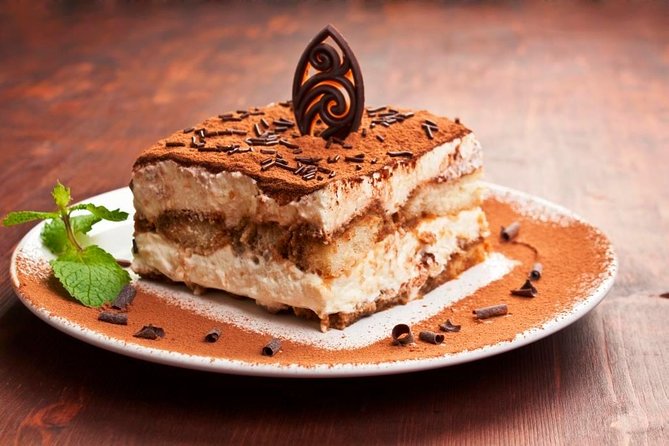
Each attraction has its own visitor guide, covering opening hours, ticket options and practical route advice. A tiramisù workshop is short — usually an hour or two, seated and indoors — so it slots into gaps that longer bookings leave behind. Most run in the historic centre, close to the sights below.
Each guide is maintained by our Independent guides, with factual details checked against official sources where available. We do not sell tickets directly. Bookings are handled by third-party booking partners, and we may earn a commission at no additional cost to you.